
Exterior Detailing Services Vaughan
RESTORE, PROTECT, & MAINTAIN YOUR PAINT
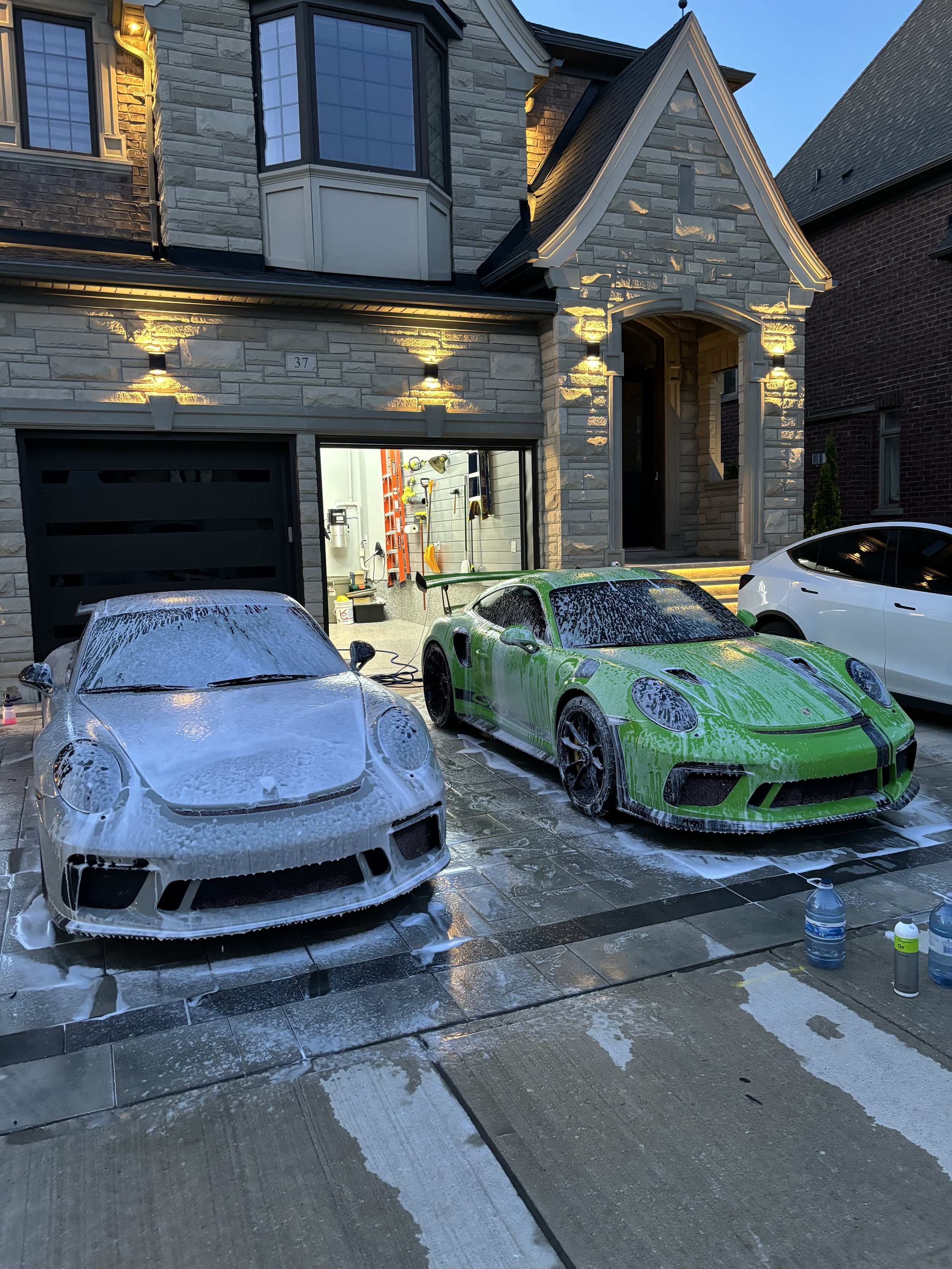
Hand Car Wash
99 Rodinea Road, Maple
Your vehicle deserves more than a basic wash. It deserves expert care.
We always start with the rims, tires and wheel well. Followed by the most important step, the pre-wash stage. Using a combination of citrus cleaning power and a foam bath, we pre-wash the vehicle to remove & loosen heavy dirt and grime. This step is crucial to preventing swirls and scratches because, before physically touching the paint, we can remove about 80% of all the dirt and grime, drastically reducing the risk of swirling or scratching the paint when doing our contact wash. Then, using specialized products such as matte soap for satin finish vehicles and Ph-balanced soap ( safe for ceramic / Waxes & Sealant ), we clean the paint with a gentle contact wash using professional techniques and practices to ensure we don’t scratch or swirl the paint. Finally, we blow dry and dry the paint with a drying aid for a streak-free finish. Most people don’t know this, but you can also scratch when drying the paint; that’s why a drying aid for lubrication is very important, plus it adds a thin layer of protection to the paint. Door jambs are also included with the drying stage.
What’s included with our exterior wash ?
( This wash is safe for ceramic coated / showroom conditon / brand new vehicles. )Pre-Wash
Rims, Tires & Wheels well
Gentle Contact wash
Windows
Dry Door jambs
Blow dry vehicle cracks and cervices
Spray sealant for a streak-free finish and protection
Surface Contamination like bird droppings, Bug guts, and Tar.
( Embedded Iron particles not included)
Cars: $69.99 / Small SUV, Truck, Jeep: $74.99 / Large Truck / SUV: $79.99
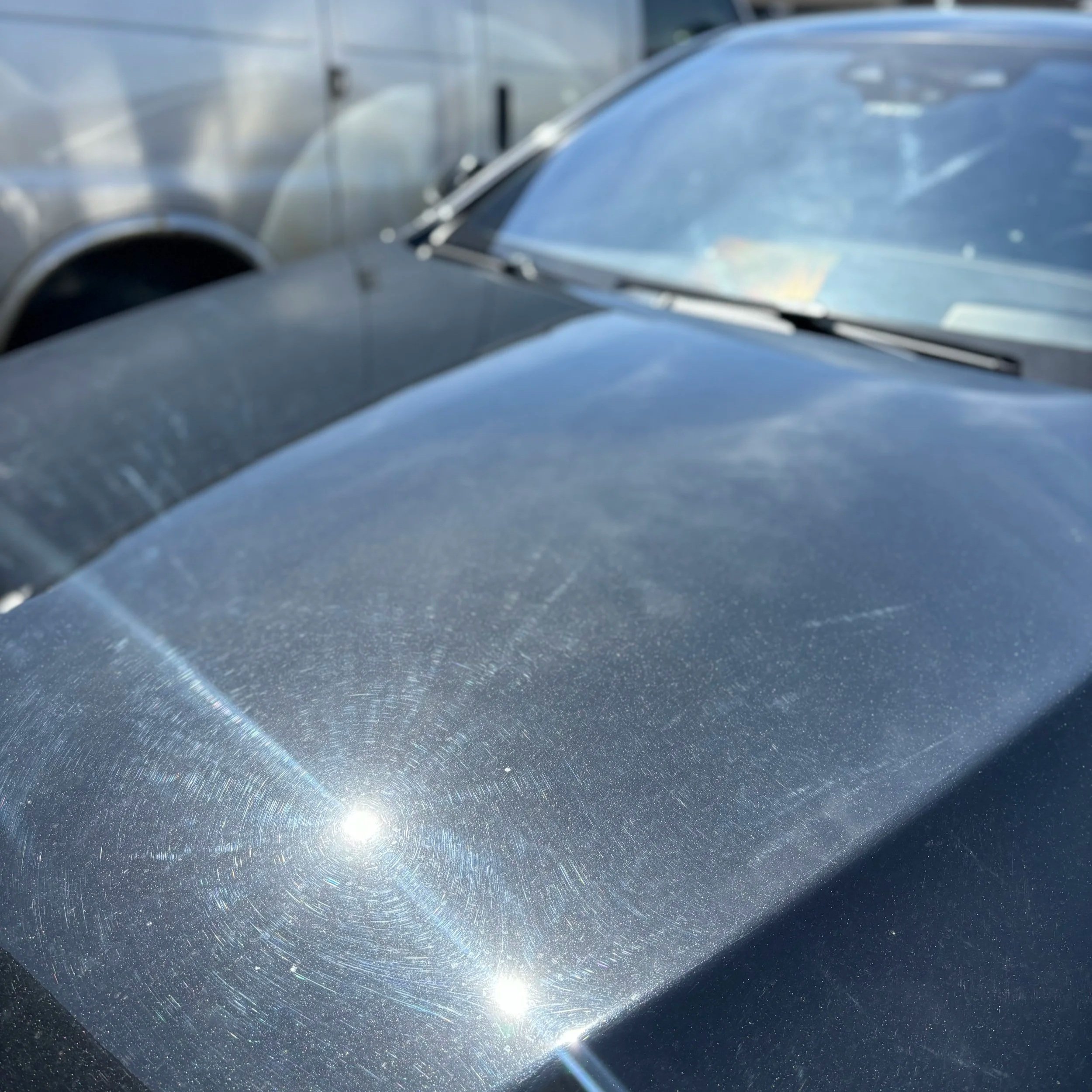
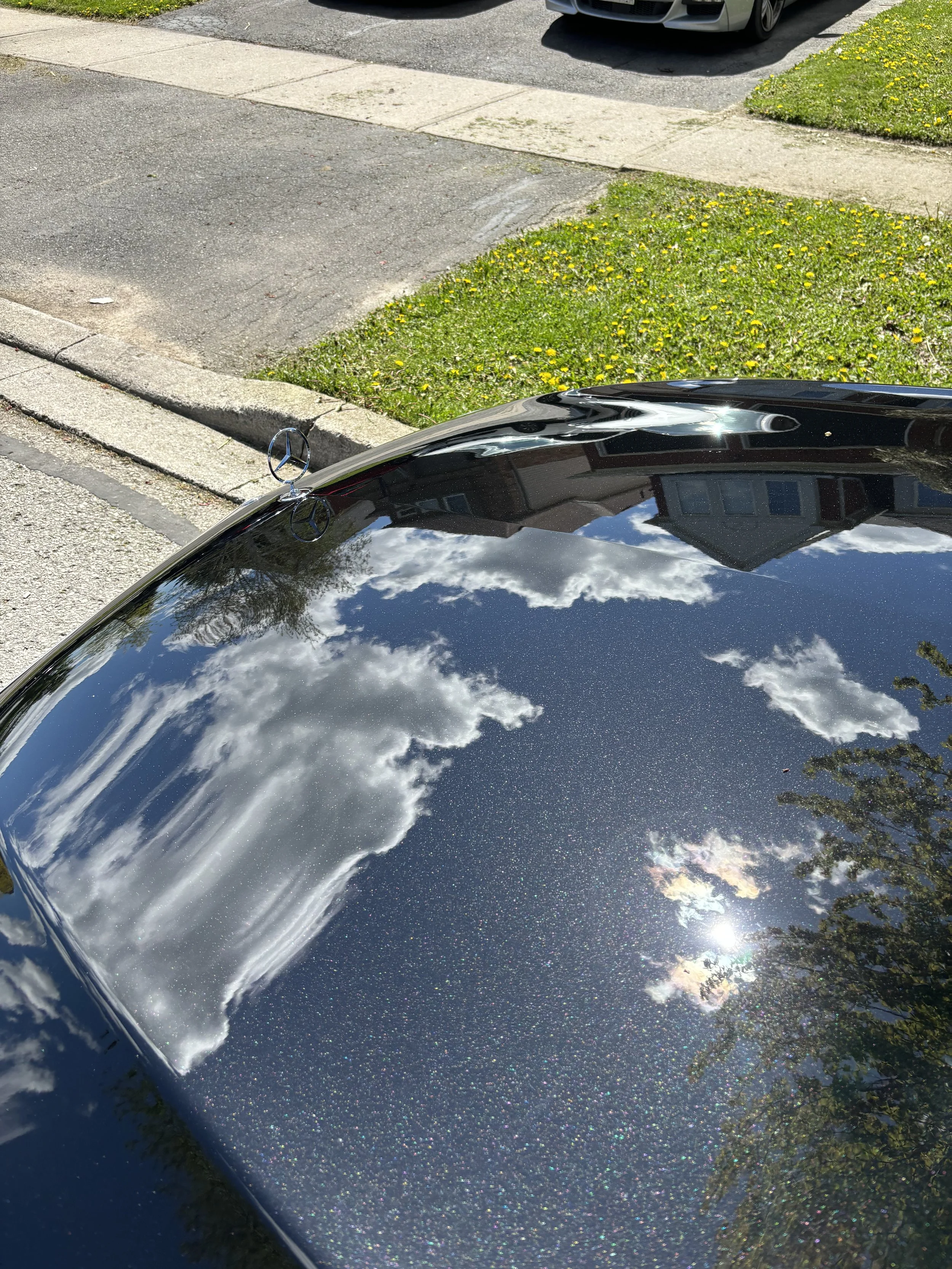
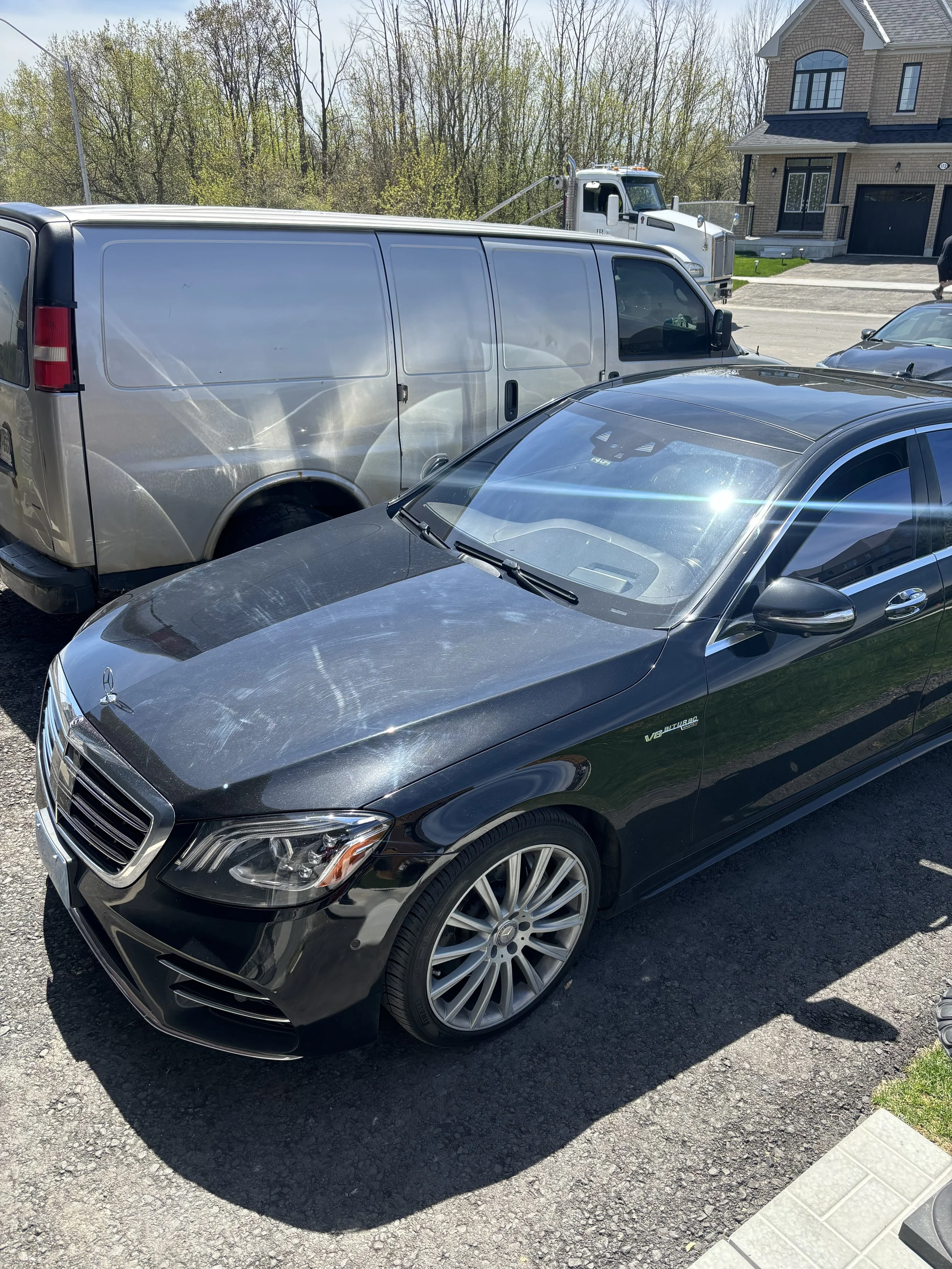
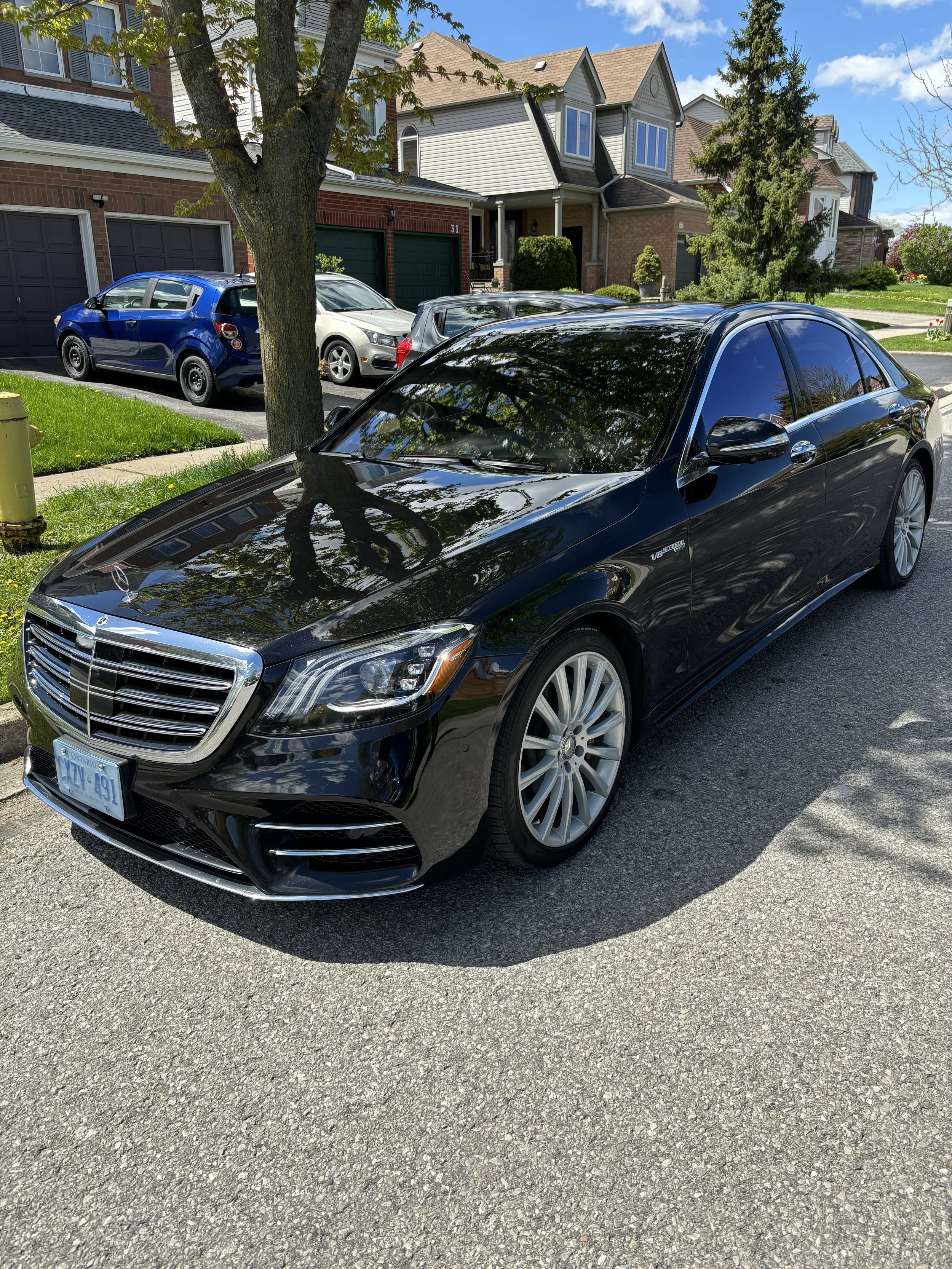
We understand that professional exterior detailing services aren’t best suited for everyone. If you see your vehicle as basic transportation and do not care about swirl marks, fine scratches, fading, or long-term paint condition, automatic, high-volume, or self-serve car washes may be best suited to you. However, I’d still like to bring to your attention the damages you may not be aware you are doing to your paint. And if you do value your vehicle’s appearance, resale value, and paint integrity, then how your car is washed matters more than most people realize. Down below is four photos of the same car. One with tons of swirl marks and one without to show you the difference in clarity & gloss a swirl-free paint can make.
Please note that swirl marks and scrtaches are alot more noticeble on dark colour paint. Hand Car Wash vs Automatic, High-Volume & Self-Serve Car Washes
Why Swirls and Scratches Matter
Swirl marks are not just cosmetic flaws. Over time, they:
Damage clear coat
Reduce gloss and paint clarity
Make vehicles appear older and poorly maintained
Lower resale and trade-in value
Require paint correction (polishing) to remove, adding cost
Preventing damage is always more effective and affordable than correcting it later. Also, if you recently got paint correction/ceramic coating services done, or just got a brand new vehicle, than i highly recommend paying attention to the potential dangers we have listed down below.
The Core Difference: Paint Safety vs Speed
A professional hand car wash is built around paint safety, control, and consistency. Every step is intentional and designed to minimize scratching and swirling. Automatic, high-volume washes and even long self-serve stations are built for speed, volume, and convenience, often at the expense of your paint, clear coat or maybe that expensive ceramic coating / PPF you decided to invest into.
A proper pre-wash to loosen and remove abrasive debris
Clean, dedicated wash mitts and lubricated shampoos
Controlled pressure and panel-by-panel technique
Safe drying methods to prevent scratching and water spots
These small practices significantly reduces the risk of swirl marks and micro-scratches caused by dragging contamination across the paint.
Professional hand washing includes:
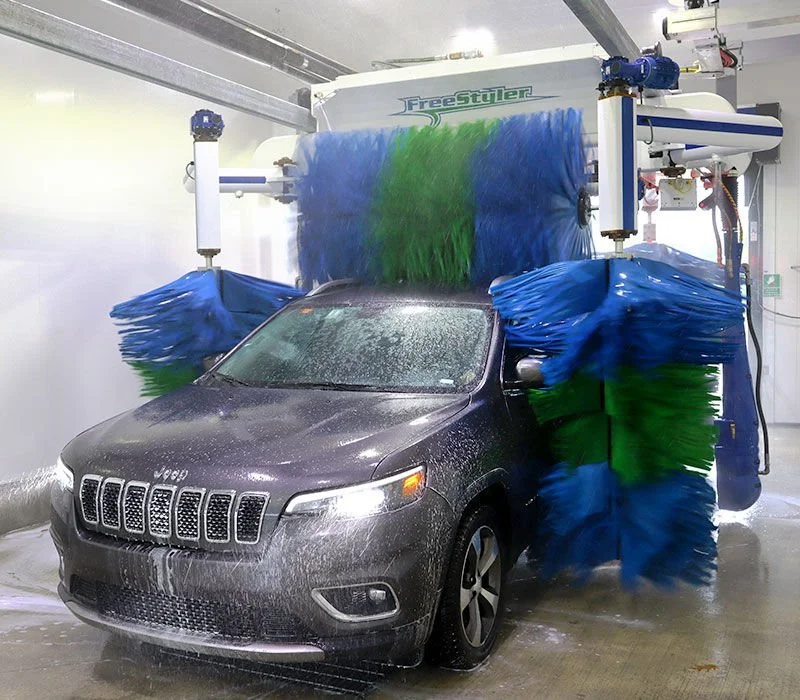
Automatic car washes, particularly brush or “soft-touch” systems, are among the most common causes of paint swirling & scratching buy why..?
The Dangers of Automatic Car Washes
Contaminated brushes and strips
These brushes are reused on hundreds of vehicles and are rarely cleaned thoroughly. Dirt, sand, brake dust, and debris become embedded and are repeatedly dragged across paint.Uniform swirl mark creation
Mechanical, circular motion creates consistent swirl patterns that dull gloss and become highly visible in sunlight (Especially on dark vehicles.)Harsh chemical reliance
To compensate for speed, lack of precision and no brushes, automatic brush-less washes use aggressive detergents that strip wax, degrade ceramic coatings, and dry out all exterior surfaces over time.
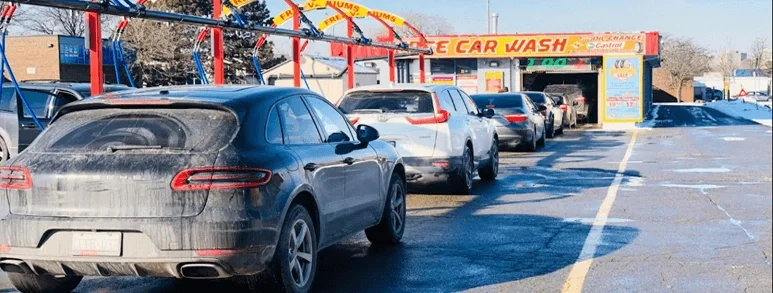
High-volume hand washes may seem safer, but volume often outweighs quality, heres how;
Contaminated wash mitts and towels
Wash mitts and towels are frequently reused across multiple vehicles, increasing the likelihood of transfer and rubbing contaminants into the paint.Skipped pre-wash steps
Without a proper pre-wash, heavy dirt remains on the surface during the contact wash. One of the quickest ways to introduce scratches.Rushed drying
Quick drying with worn, contaminated, non-plush towels can cause just as much damage as the wash itself. Plus, no drying aid for lubrication.
The Risks of High-Volume Hand Car Washes
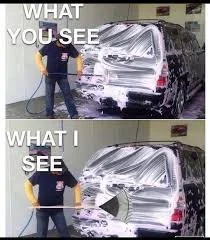
Self-serve wash stations are convenient, but their brushes are one of the most damaging tools you can use on your vehicle and here’s why;
Unknown contamination
These brushes are dropped on the ground, dragged across dirty wheels, and used on heavily soiled vehicles. Sand and grit become trapped deep within the bristles.High pressure + friction
When combined with pressurized water, these contaminated brushes effectively grind abrasive particles into your clear coat.False sense of safety
Many owners believe rinsing the brush makes it safe….. It does not. Once grit is embedded, it remains a serious risk to your paint.
The Often-Overlooked Danger: Self-Serve Wash Brushes
The Professional Difference
A professional hand car wash is designed for car owners who want to preserve their vehicle’s paint and have it looking its best for years to come. If you care about maintaining your paint and avoiding unnecessary scratches, the choice is simple.
Book a professional exterior car wash with our team today and wash your vehicle the right way.
But wait! What are iron particles and why isn’t it included? If your paint literally feels physically rough or maybe you notice yellow dots all over your paint after a wash ( visible noticeable on white paint ) its heavily contaminated by these iron particles and unfortunately these contaminations don’t come off with just a standard hand wash. The next sections are about paint decontamination & the process of getting rid of them to not only bring back depth and smoothness back into your paintwork but also prevent rusting and clear coat failure. What If My Vehicle Already Has Swirls… Is It Still Worth It?
Yes! It’s absolutely still worth it. Even though a professional hand car wash will not remove existing swirl marks or scratches, it prevents further damage to the paint, which will cost you more if you decide to correct the scratches and swirl marks down the road.
Continuing to use automatic, high-volume, or self-serve car washes will steadily worsen the condition of your paint, adding deeper defects over time. The more neglected the paint becomes, the more aggressive the correction process needs to be. This directly impacts paint correction pricing, as heavily damaged paint requires additional machine polishing stages or sanding stages, more labor hours, more product, and more clear-coat removal to achieve the desired results. In other words, poor washing habits today lead to higher correction costs later.
A professional hand wash helps stabilize your paint’s condition, maintain gloss, and protect the remaining clear coat. If you ever choose to invest in paint correction, ceramic coating or PPF, proper washing ensures those results last longer.
Paint Contamination
How do I know if my paint is contaminated?

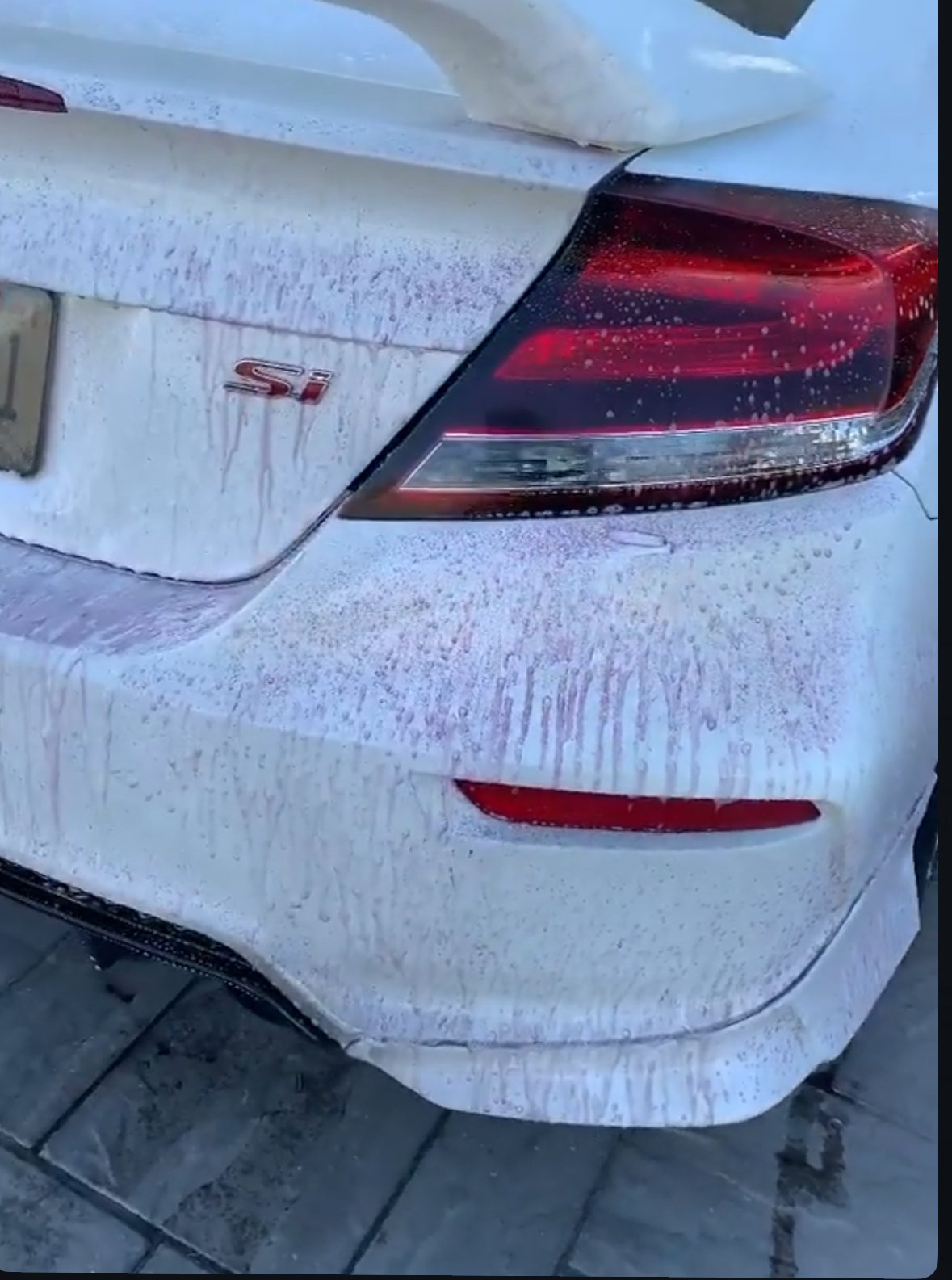
If you look closely ( Zoom in ) you can see the yellow dots I’m talking about. This is after a wash.
Have you noticed tiny rust-colored specks on your car’s paint? Or maybe the glossy finish isn’t what it used to be, even after a fresh wash. What you’re seeing could result from iron contamination, an invisible enemy attacking your vehicle’s paint. It’s easy to overlook this issue, but ignoring it, unlike swirl marks that are mainly appearance issues, can lead to permanent damage by promoting rust and premature clear coat failure. So how do you know if your vehicle is contaminated? The best way is actually after a wash, if your paint is physically rough, dull-looking or you see yellow rust-looking spots. Your paint is contaminated with iron particles. If your vehicle is parked often near train tracks or stations, near industrial areas or you drive often on highways your paint will get contaminated faster and will build up heavier than others that for example, drive less and garage park their vehicle.
Rough Paint is contaminated paint

What Is Iron Contamination, and
Why Should You Care?
Iron contamination happens when tiny metal particles from hot brake dust, road debris, or industrial fallout settle onto your car’s surface. These particles bond to the paint, and over time, they oxidize, causing rust spots that eat into the clear coat. While these contaminants are invisible at first, they can lead to long-term damage, leaving your paint feeling rough, looking dull, and vulnerable to rust.
For vehicle owners, this means a gradual decline in your vehicle’s appearance and paint ( clear coat specifically ) integrity, even if you wash it regularly. You may understand the importance of maintaining a clean vehicle, but contamination can undermine even the best care if it isn’t properly assessed and removed in a time. It can be frustrating to watch your pride and joy lose its showroom sparkle because of something you can’t see.
The solution? Paint decontamination. Paint decontamination is the process of removing iron contamination by either a chemical reaction with specialized products ( Iron Remover ) formulated to loosen and remove iron particles or mechanically using a clay bar or clay mitt, depending on the severity of the contamination and the overall condition of your paint. In extreme cases, build-up will require polishing or even wet sanding to remove these contaminations if it’s been years or if your vehicle is exposed daily to heavy contamination. Unfortunatly polishing is usually the solution on daily driven vehicles mainly because car owners are unaware of these invisible threats. The huge misconception that regular cleaning is enough. Remember when it comes to paint contamination, it’s not just about looks… It’s about preserving the integrity of your clear coat. Leaving contamination on your paint will cause permanent damage ( rusting ) and clear coat failure. By removing embedded iron particles, you restore your car’s smooth surface, prevent oxidation, and keep the paint in pristine condition.
Iron Remover VS Clay Bar Treatment
Iron Remover + Sealant
Ideal For…
Those with lightly contaminated vehicles
Maintaining Ceramic-coated, Waxed or Sealed Vehicles
Regular Maintenance
Weekend only vehicles
vehicles that arent highway driven often and garage kept
3-6 month paint protection
-
Pros
Perfect for cermaic coating maintenance
Non-Abrasive solution to decontaminating flawless/new paint
Inexpensive
non-time consuming
Cons
Will not remove overspray
will not fully decontaminate heavily contaminated paint
-
Cars: 1.5 Hours
Small Trucks, SUV, Jeep: 2 Hours
Large SUV (7-Seater), Truck (F250): 2.5 Hours
-
Cars: $199.99
Small Trucks, SUV, Jeep: $249.99
Large SUV (7-Seater), Truck (F250): $274.99
Wash / Clay / Sealant
Ideal For…
Those with heavily Contaminated Paint
( Feels Rough )
Overspray Removal
Those Seeking an inexpensive option to improve vehicle appearance and protection
Daily driven vehicles that park outside and does alot of highway driving
3-6 Month paint protection
-
Pros
Removes heavy contamination sitting on the clear coat.
Inexpensive solution to improve the vehicle’s appearance (Gloss)
Smooth reflective paint
Cons
Clay bar is abbrasive and could cause marring on softer paint.
-
Cars: 2 hours
Small Trucks, SUV, Jeep: 2.5 hours
Large SUV (7-Seater), Truck (F250): 3 hours
-
Cars: 249.99
Small Trucks, SUV, Jeep: 299.99
Large SUV (7-Seater), Truck (F250): 349.99

Buff & Wax ( + Sealant )
Ideal for…
those who want to correct minor to moderate swirl marks and scratches.
Those seeking to drastically improve vehicle appearance without paying expensive paint correction costs
Those that allowed heavy contamination to sit on the paint for too long, and now the iron contamination is starting to eat at the clear coat.
6-12 Month paint protection
-
Pros
Fills minor to moderate scratches and swirl marks
Removes & etching & watermarks
Dramatically increases vehicle appearance
Inexpensive solution compared to paint correction
Cons
Time-Consuming
Temporary FILLS light to moderate scratches and swirl marks, meaning once wax fades over time, swirls and scratches will appear again ( unlike a correction that permanently removes swirls and scratches)
-
Cars: 4 hours
Small Trucks, SUV, Jeep: 5 hours
Large SUV (7-Seater), Truck (F250): 6 hours
-
Cars: 349.99
Small Trucks, SUV, Jeep: 374.99
Large SUV (7-Seater), Truck (F250): 399.99
Iron removers, clay bar treatments and in extreme cases machine polisher are essential tools for decontaminating your car’s paint, but they serve slightly different purposes. Let’s get into it…
Iron removers are chemical sprays designed to dissolve embedded iron particles, making them ideal for safely targeting brake dust and industrial fallout without physical abrasion. This is ideal for regular maintenance, maintenance for longevity of waxed , sealed or ceramic coated vehicles and finally vehicles with light contamination. The goal is to decontaminate your paint often enough with this chemical so that we don’t have to resort to other options like a clay bar which is aggressive on the paint or polishing which can get pricy. This options allows us to decontaminate our paint without using any abrasive ( Clay bar ) that will introduce maring or swirls in the paint work. Yes if you didn’t know clay bars are aggressive and will leave maring marks on your paint work.
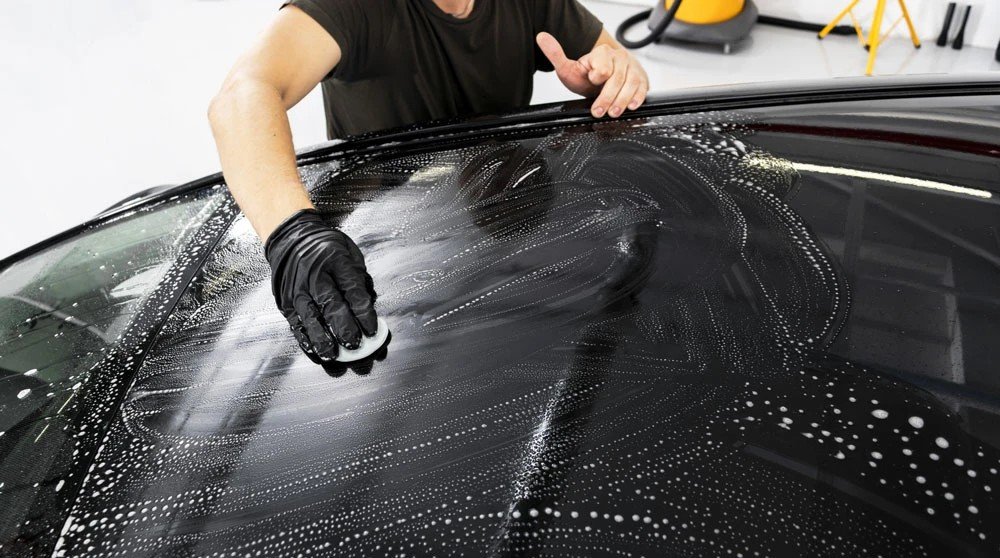
So why use a Clay bar? Well if you haven’t decontaminate your paint in years these iron particles will need a clay bar to remove the deeply embedded contamination. Clay bars are manual tools that remove a broader range of contaminants, including tree sap, tar, and overspray, by physically gliding clay over the paint. While iron removers are faster and safer, clay bars provide deeper cleaning for non-metallic contaminants but require more time and effort. For the best results, these methods often work hand-in-hand, with iron remover used first to dissolve iron and clay bar treatment to smooth out the surface. After using a clay bar we use a paste wax with fillers to fill in any maring that may have been introduce during our claying process but this is only temporary. To permanently remove these maring marks a polishing stage is required.
Now if its been years of daily driving on the highway, your car sits outside overnight and you never decontaminate your paint its possible that a clay bar will pull of majority of contamination but not all of them. Contamination can etch their way so deep into your clear coat that a clay bar can’t reach them and will require levelling the clear coat with a machine polisher to get rid of them. At least with this approach you will remove any maring from the previous step and correct minor swirl marks and scratches.
Understanding these tools can help you choose the right approach to keep your car’s paint flawless. If you need help determining which option is best for you give us a call and we can help guide you and answer any questions you may have.
Video of the iron remover decontamination process
Adressing common questions & Concerns
-
Yes! Iron particles don’t go away with regular washing. Unlike other services that make your car look good, these contaminants will continue to corrode your paint, leading to costly repairs later if you don’t remove them.
-
Absolutely. With a proper assesment we can use the right process and tools based on your vehicles condtion and your driving habits. To safely lift and remove iron particles without harming your paint
-
No worries, give us a call! We can help. We can asses your vehicle over the phone and direct you in the right direction thats best for you vehicle.
-
In short, if your paint feels rough after washing, has visible iron spots, or your protection isn’t performing properly (poor water beading) or doesnt last as long as it should, decontamination is most likely needed.
-
First thing first time is valuable to most but if you do have time, inproper decontamination can cause damage to your paint. How so ?
Clay bar comes in different grit grades ( light, medium, hard ). Choosing the right grade based on the amount of contamination you have and how soft or hard you paint is, is crucial to avoid marring.
Iron remover can stain your paint if you don’t follow the right precautions
-
For daily-driven vehicles in Canada, typically 1–2 times per year depending on driving conditions and storage. Vehicles exposed to highway driving, rail dust, or winter salt may require it more frequently. Every 1-3 months
Here’s What Others Said About These Services.
-

“I didn’t realize how much my car needed this until I saw the results. The gloss, reflection & smoothness results were night and day! And the best part? I didn’t have to lift a finger.”
Busy Profesional
-
“I thought I was taking great care of my car, but the decontamination process showed me just how much I’d been missing. My paint feels like glass now!”
Car Enthusiast